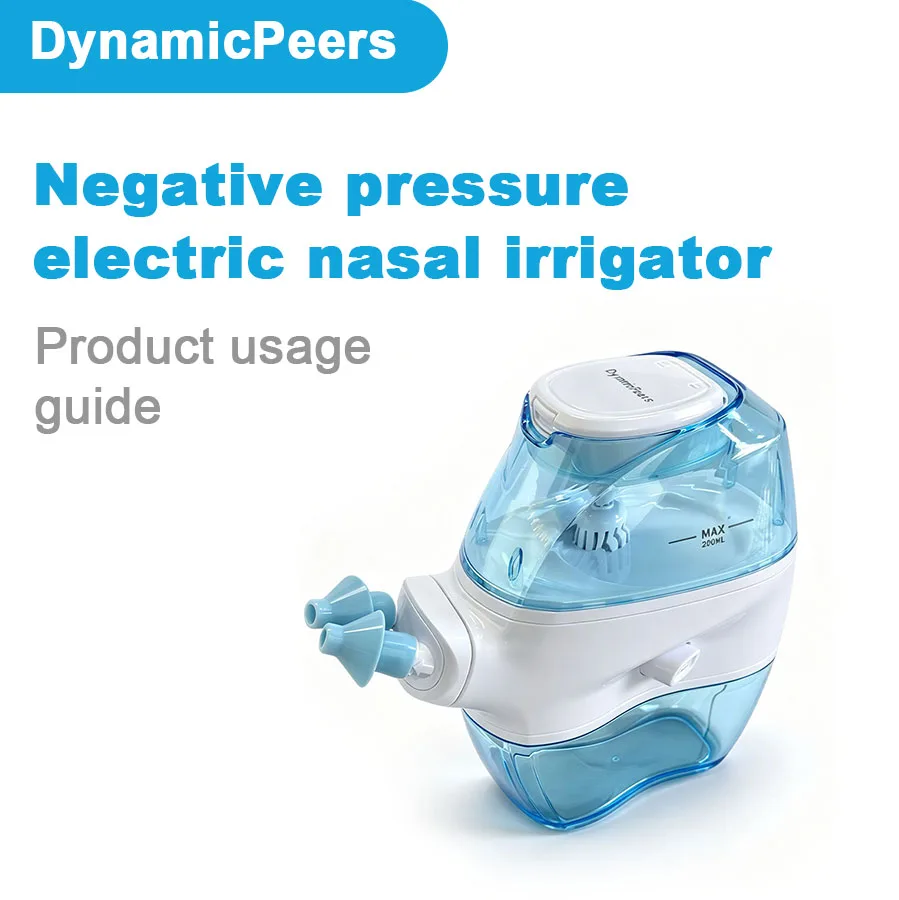
Dynamic Peers™ - The First Visual Electric Negative Pressure Nasal Irrigator
DynamicPeers Electric Nasal Irrigator, your ideal companion for home nasal care.
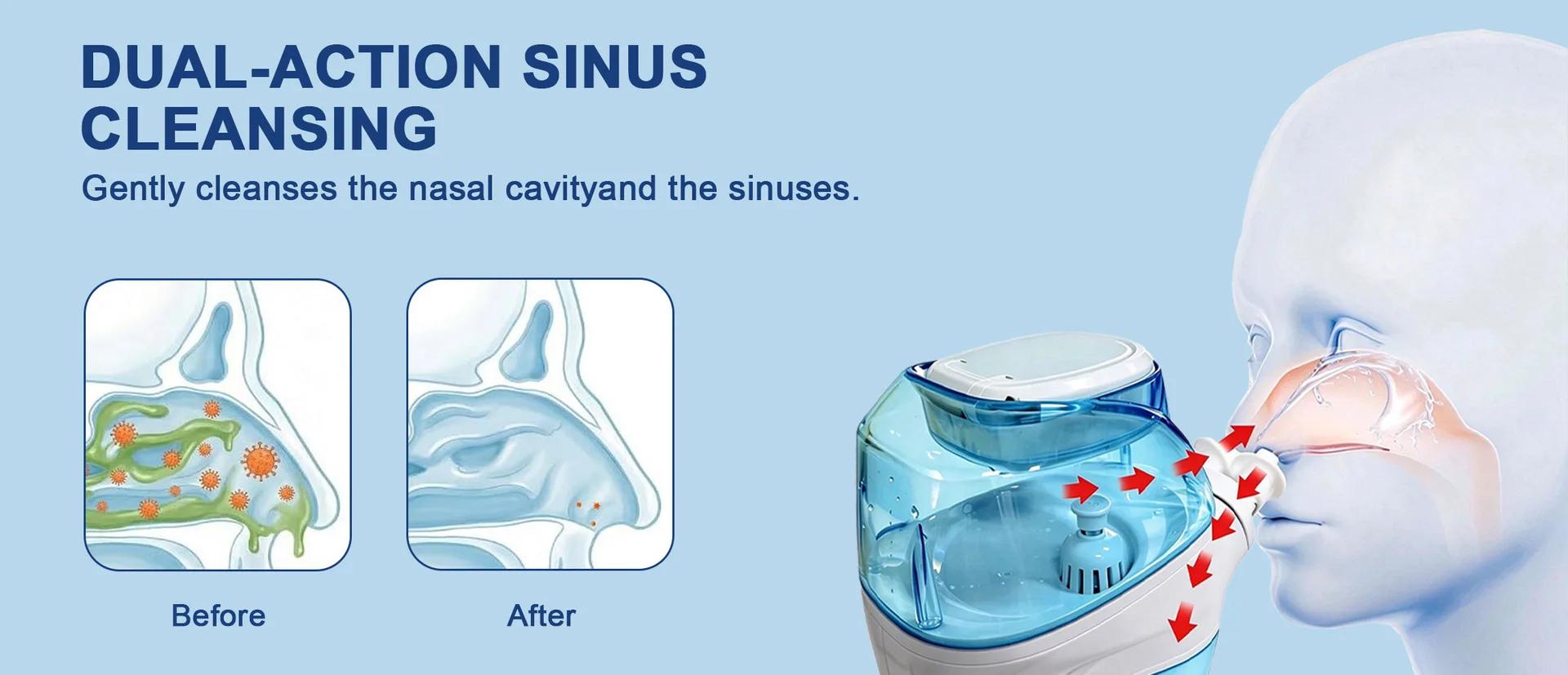
- Equipped with stable pulsating water flow technology, adjustable gear pressure for gentle and efficient nasal cavity cleaning.
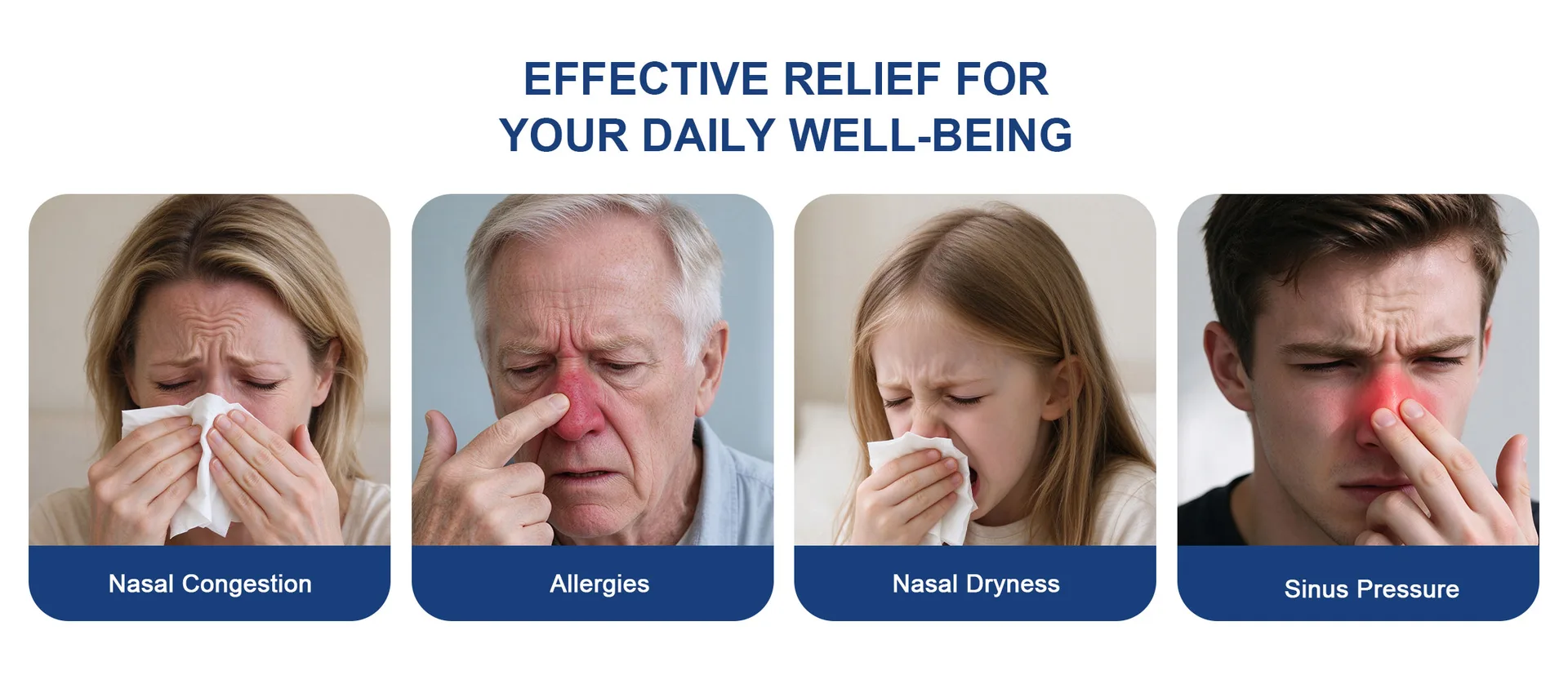
- Helps relieve nasal discomfort caused by allergies, dry air, nasal congestion, and external irritants.
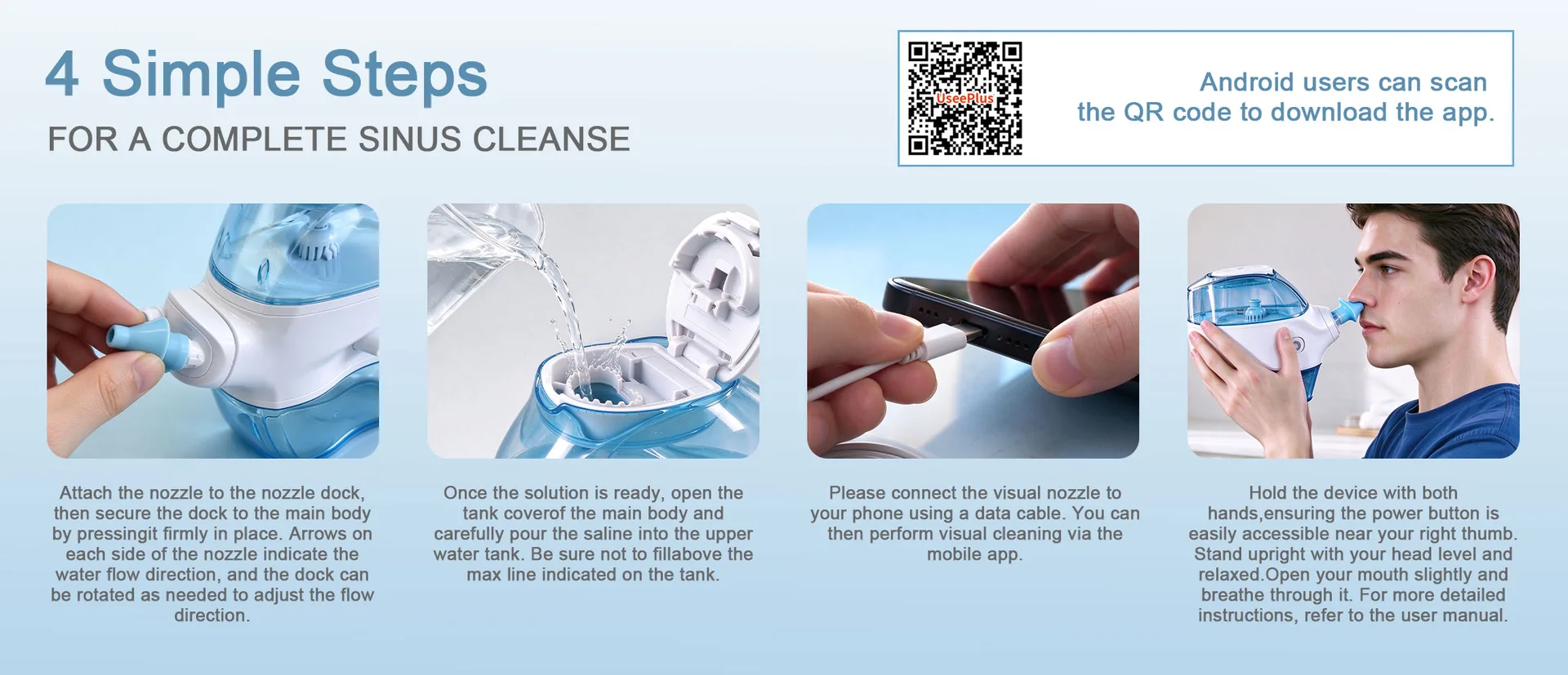
- USB connection to mobile app, lightweight and leak-proof body, convenient to carry for home use, business trips, and travel.
- Contact parts are made of food-grade materials, suitable for adults; children must use it under adult supervision and monitoring.
- Clean nasal cavity, breathe freely.
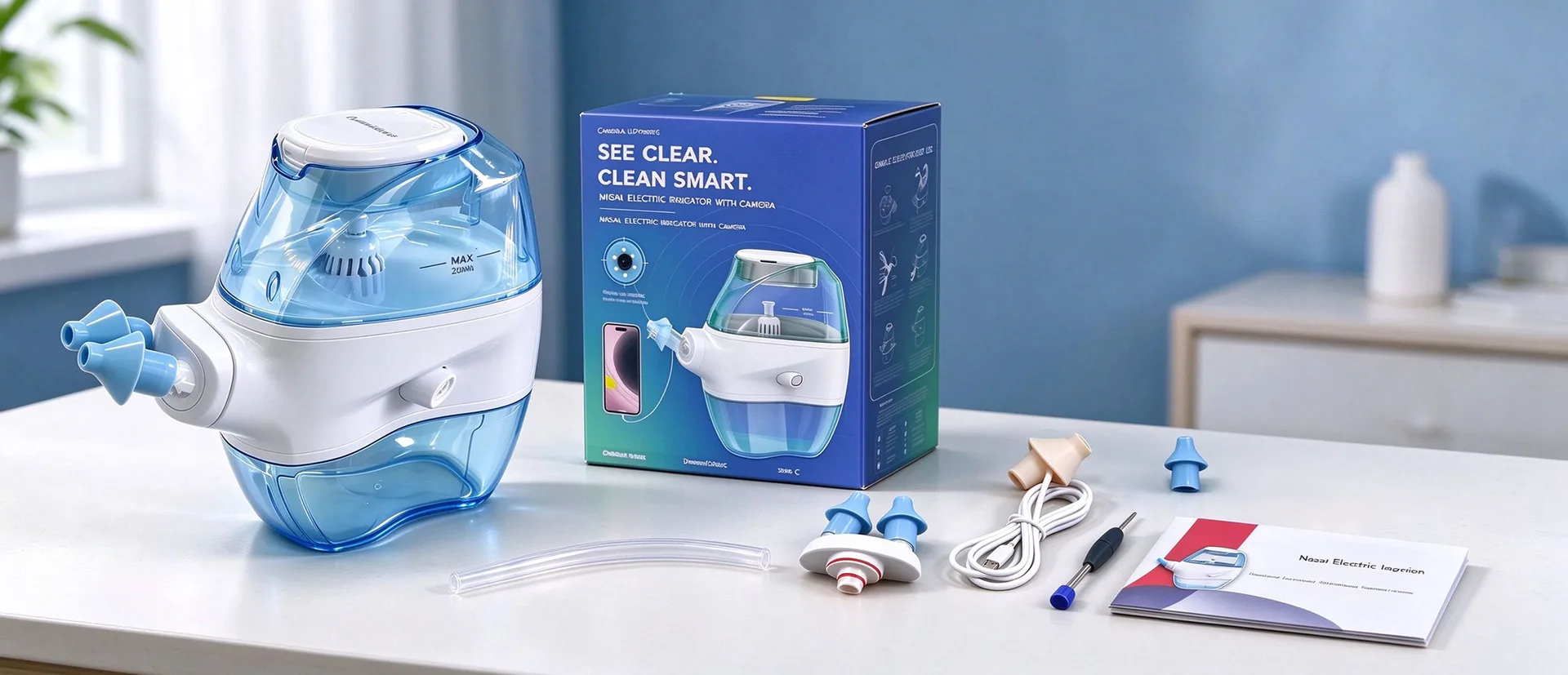
Packing List
Shipping Information
After-Sales Protection
Specifications
| Length * Width * Height(inches) | Weight(KG) | Color | Material | Battery |
|---|---|---|---|---|
| 6.1 x 3.8 x 7.1 | 0.58 | Blue | Plastic | Requires 2 AA batteries |
Detail Images
Explore additional product details and application images.

Frequently asked questions
What is a visual negative-pressure electric nasal irrigator? How is it different from a regular nasal irrigator?
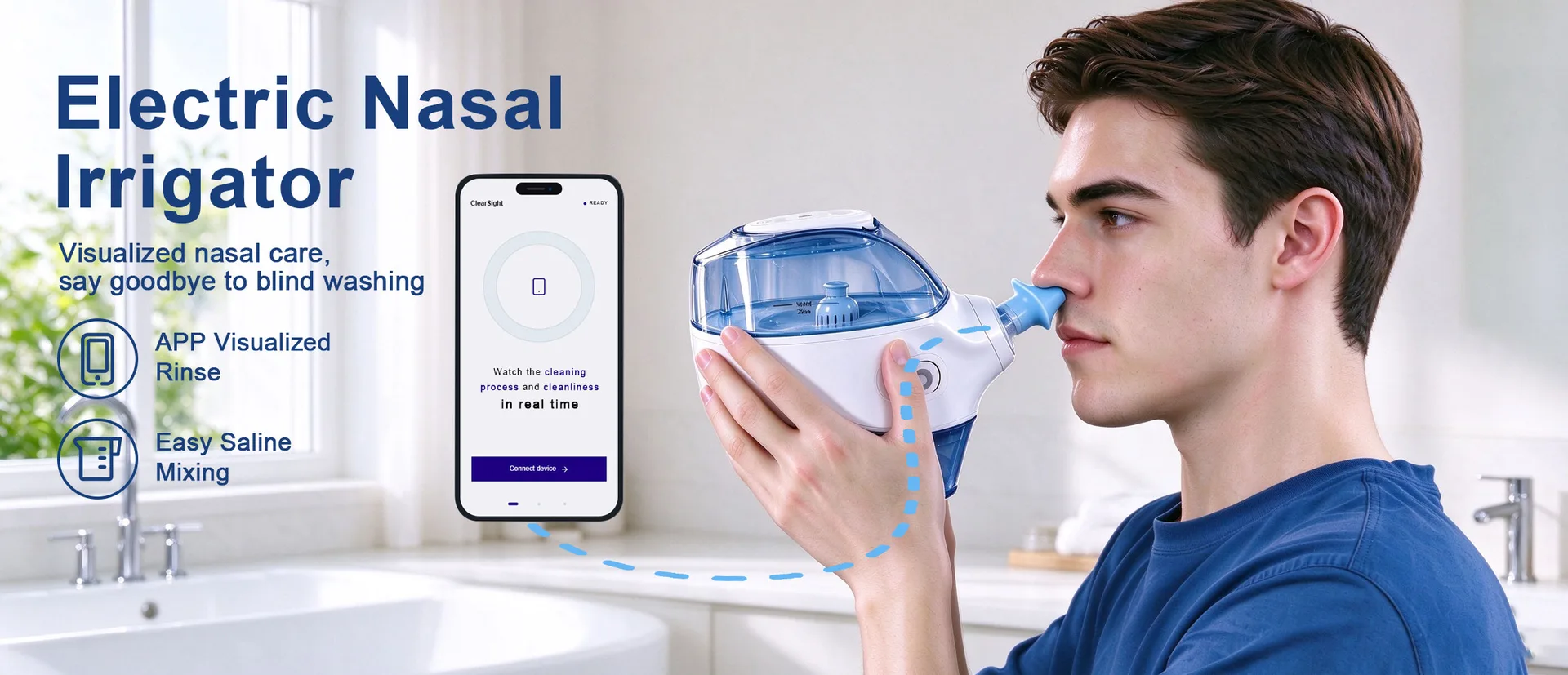
The visual negative-pressure electric nasal irrigator is a nasal care device that combines "high-definition visualization" and "negative-pressure suction" technologies. Its standout feature is a built-in micro-camera on the irrigator head, which streams the interior of the nasal cavity to a screen in real time. Unlike traditional irrigators that rely on "blind rinsing," it allows users to intuitively see pus, mucus, allergens, and debris deep in the nasal cavity, and witness firsthand as negative pressure suctions them away. Combined with "positive-pressure flushing" and "negative-pressure suction" technologies, waste liquid is directly drained into a waste tank, ensuring a more thorough clean while avoiding choking and cross-contamination issues.
How does the visualization feature specifically help during nasal irrigation?
Precise positioning: Clearly see the exact location of boogers, dry scabs, or thick secretions, guiding you to adjust the nozzle angle for targeted flushing. Effectiveness confirmation: Visually determine whether the nasal cavity has been thoroughly rinsed, preventing ineffective or excessive flushing. Health observation: Helps in daily observation of the health status of the nasal mucosa (such as redness, swelling, or damage), providing an intuitive reference for medical consultation.
What should I do if I feel water flowing into my ears or throat while rinsing?
This is usually caused by the soft palate not being fully closed or improper operating posture. Close the soft palate: Make a "hum" or "ah" sound in your mouth during rinsing, which helps seal the channel between the nasal cavity and oral cavity, preventing backflow. Adjust posture: Keep your head tilted slightly forward; do not look up or lie flat. Control pressure: Do not jam the nozzle firmly against the inner wall of the nasal cavity. Leave a tiny gap or wiggle it slightly to prevent excessive suction from blocking and reversing the water flow.
What should I do if my nose is completely blocked and water cannot get through at all?
During severe nasal congestion, the nasal passage is narrow, making it difficult for water to pass through in one go. You can try the "back-and-forth flushing method": Flush one nostril for about 10 seconds; Stop and gently blow your nose; Rotate the water flow direction of the irrigator 180 degrees (or switch to the other side) and flush in reverse for 10 seconds; gently blow your nose again and rest for a moment. Repeating this "back-and-forth" process a few times helps soften and break up thick secretions until water flows smoothly out of the other side.
What should I do if the machine does not respond when the switch is pressed, or if the suction becomes weaker?
Check consumables: For models that require specialized SaltPods, ensure the salt capsule is correctly placed in the crushing chamber and the cover is clicked securely shut. For safety, the machine will lock without a salt capsule to prevent nasal stinging caused by flushing with pure water. Check the battery: Confirm that the battery level is sufficient and installed in the correct direction. Check for blockages: Use the visual screen to check if the nozzle or internal pipes are blocked by thick mucus or debris. It is recommended to clean the nozzle with warm water. Operational issues: If the nozzle is completely blocked by the nasal wall, suction will also weaken. Simply pull it out slightly or adjust the angle.
Can children use the visual negative-pressure nasal irrigator?
Yes, and the visualization feature is especially helpful for children's care, provided operation guidelines are followed: Age and cooperation: Generally recommended for children over 4 years old who can understand instructions and cooperate by breathing through their mouth. Pre-wash preparation: If there are hard, dry scabs in the nasal cavity, soften them with a saline spray first to prevent negative pressure from drawing hard scabs deep inside. Posture and duration: Have the child lie on their side or tilt their head forward by about 30 degrees (like a "side bow"). Single suction sessions should not be too long (recommended to keep under 15 seconds). Post-wash observation: Keep the child in an upright sitting posture for 15 minutes after washing to prevent residual liquid backflow. If the child frequently pulls their ears, cries at night, experiences decreased hearing, or has a fever, it may indicate otitis media; stop use immediately and seek medical attention.
Can a nasal irrigator be shared by the whole family? How to clean it?
Although some high-end models adopt an anti-backflow design where "pure water and waste liquid are completely isolated," reducing the risk of cross-infection, it is generally not recommended for multiple people to share the same set of core components. If sharing is necessary, you must ensure: Dedicated tips: Each family member uses their own exclusive silicone nasal pad/nozzle. Thorough disinfection: After each use, remove the detachable silicone parts, wash them with warm water and mild detergent, or use alcohol/white vinegar for disinfection, then dry them completely to prevent bacterial growth.
Can I use tap water and table salt to make my own nasal rinse solution?
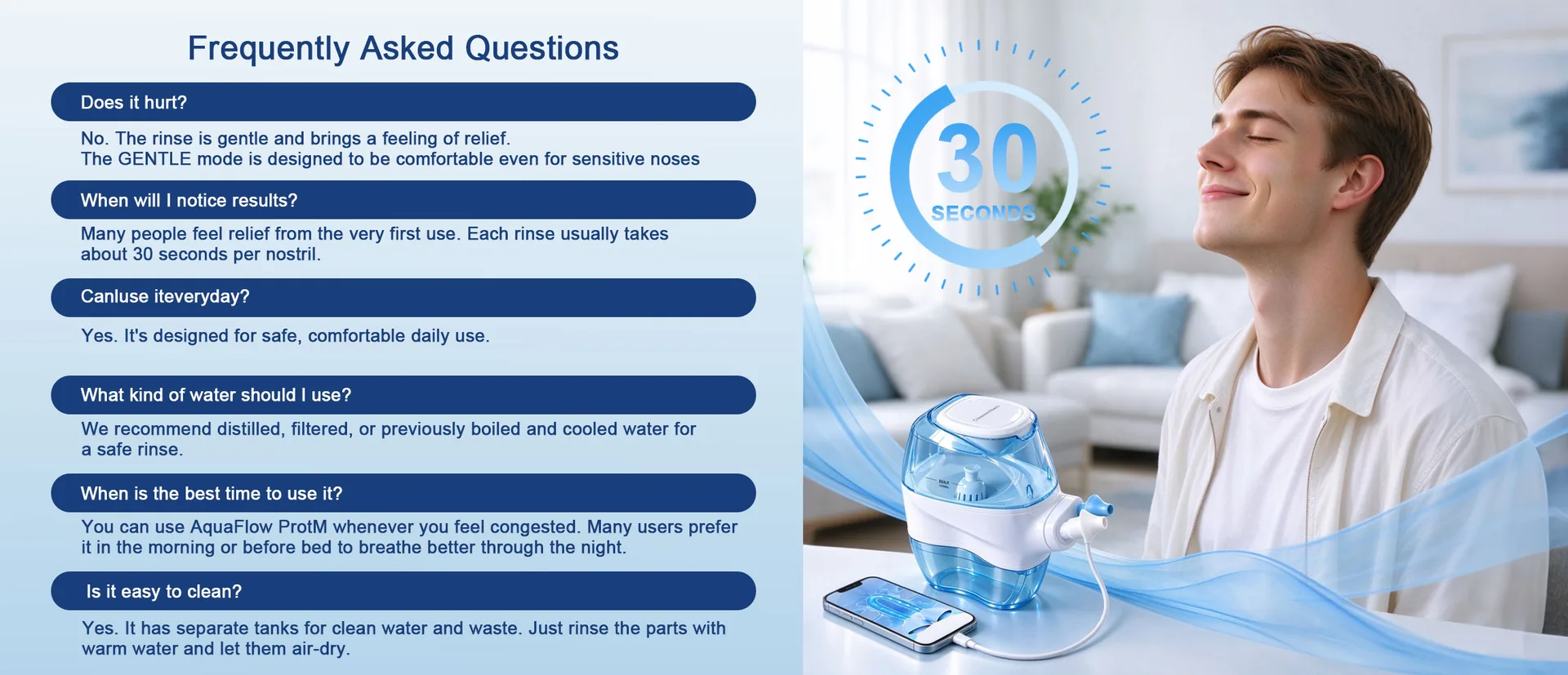
Absolutely not! Tap water may contain bacteria, viruses, or even deadly amoebas, and rinsing the nasal cavity directly with it can easily cause severe intracranial infections. You must use standard normal saline, specialized nasal irrigation salt capsules, or sterile physiological seawater. At the same time, the temperature of the flushing solution should be close to body temperature (around 37°C); too cold or too hot can irritate the nasal mucosa.
How often is it appropriate to use?
Daily care/Healthy individuals: Use 2-3 times a week to remove dust and allergens from the air. Rhinitis flare-up/Cold congestion: Use 1-2 times daily as directed by a doctor. Note: Excessive and frequent use is not recommended to avoid disrupting the nasal cavity's own mucus barrier and micro-ecological environment.